
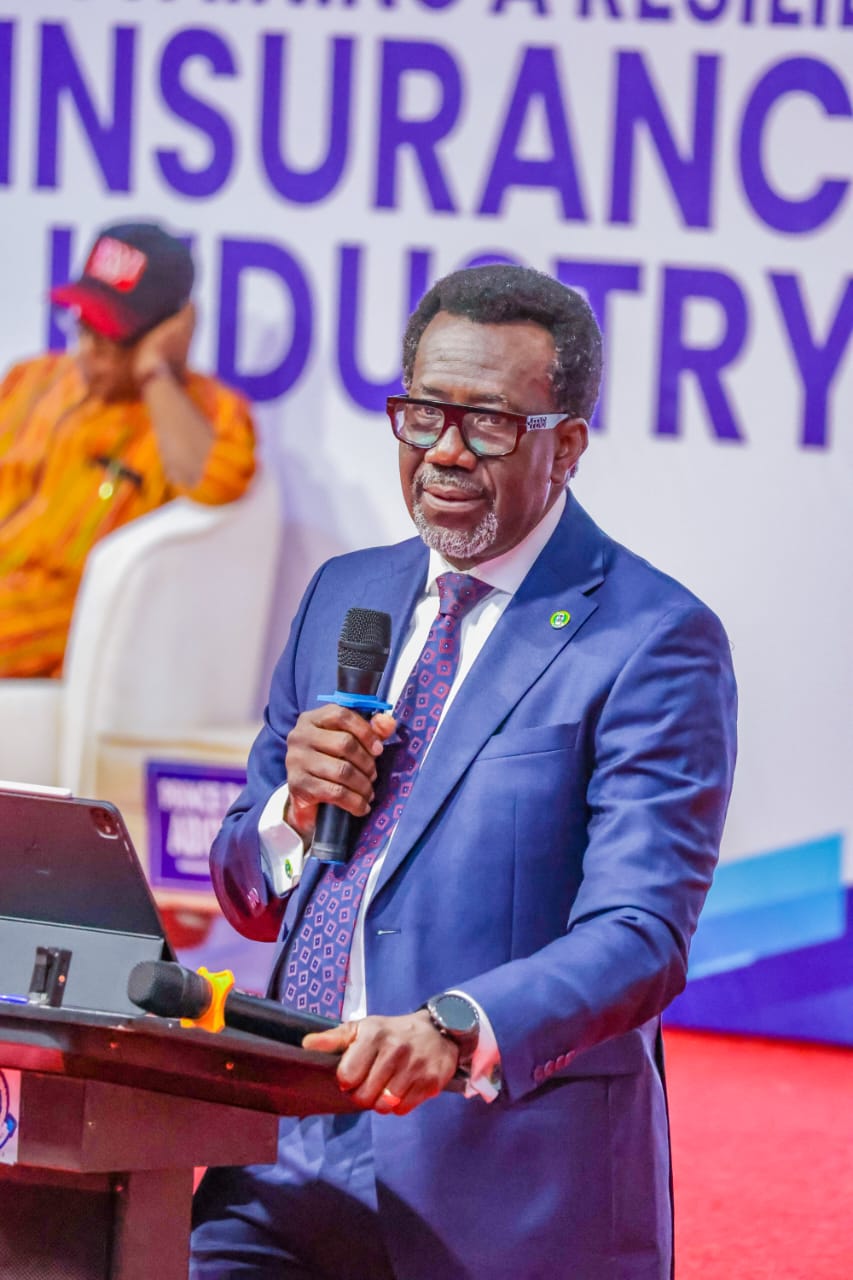
KEYNOTE ADDRESS BY THE COMMISSIONER FOR INSURANCE/CHIEF EXECUTIVE OFFICER NATIONAL INSURANCE COMMISSION (NAICOM), MR OLUSEGUN AYO OMOSEHIN AT THE 2026 INSURANCE PROFESSIONALS’ FORUM, ABEOKUTA, OGUN STATE
THEME: “THE ECONOMICS OF RISK: SUSTAINING A RESILIENT INSURANCE INDUSTRY”

Protocols
It is with profound honour and a deep sense of responsibility that I address this distinguished gathering at the 2026 Insurance Professionals’ Forum under the compelling and forward-looking theme, “The Economics of Risk: Sustaining a Resilient Insurance Industry.”
I wish to express my sincere appreciation to the Governing Council and leadership of the Chartered Insurance Institute of Nigeria for their steadfast commitment to professional excellence, knowledge advancement, and capacity development within our industry. The Institute has remained a critical pillar in strengthening professional standards and cultivating the human capital required for a modern and globally competitive insurance sector.
We are living through an era defined by profound economic and societal transformation. Across the world, the landscape of risk is changing with unprecedented speed. Economic volatility, climate-related catastrophes, technological disruption, demographic transitions, cyber vulnerabilities, geopolitical uncertainties, and evolving consumer expectations are reshaping the assumptions upon which traditional insurance models were built.
At the same time, Nigeria’s insurance industry stands at a historic inflection point. Through recent regulatory reforms, particularly the implementation of the Nigeria Insurance Industry Reform Act (NIIRA) 2025, the sector has entered a new phase of development marked by higher expectations, stronger institutions, enhanced regulatory oversight, and a renewed commitment to policyholder protection.
Against this backdrop, it becomes imperative to revisit a fundamental question: What is the true economic purpose of insurance?
The answer lies in understanding that insurance is far more than financial service. It is a strategic instrument for economic stability. It is the institutional mechanism through which societies transform uncertainty into confidence and convert vulnerability into resilience.
The Economics of Risk and the Social Value of Insurance
At its essence, risk represents uncertainty regarding future outcomes. Economics teaches us that uncertainty influences virtually every aspect of human behaviour, from investment decisions and consumption patterns to entrepreneurship and long-term planning.
Without effective risk management, economic actors become cautious. Investments decline. Innovation slows. Growth becomes constrained.
Insurance emerged as one of humanity’s most sophisticated responses to this challenge. Through pooling, diversification, and risk transfer, insurance enables individuals, businesses, and governments to undertake productive activities without bearing the full burden of uncertainty.
Consequently, the insurance industry occupies a uniquely strategic position within every economy. It mobilizes long-term savings, facilitates investment, supports financial stability, protects households, promotes entrepreneurship, encourages capital formation, and underwrites economic growth.
Agriculture cannot flourish without crop insurance. Infrastructure development cannot proceed sustainably without construction and engineering covers. Trade cannot expand without marine insurance. Credit markets cannot deepen without adequate protection mechanisms. Energy projects cannot attract investment without robust risk transfer structures.
Indeed, insurance is often described as the invisible infrastructure of economic development because its contribution, though frequently unnoticed, is indispensable.
Viewed from this perspective, the economics of risk extends beyond actuarial calculations and underwriting decisions. It concerns the broader relationship between uncertainty, productivity, social welfare, financial stability, and sustainable development.
The Changing Architecture of Risk
While the foundational purpose of insurance remains unchanged, the nature of risk itself is evolving. The contemporary risk environment is increasingly interconnected, systemic, and global.
Traditional risks such as fire, marine losses, motor accidents, industrial hazards, and property damage remain significant. However, they now coexist with emerging risks whose frequency, scale, and complexity challenge conventional underwriting models.
Climate change has fundamentally altered catastrophe patterns. Floods, droughts, desertification, storms, and environmental degradation are producing loss events that are larger, more frequent, and less predictable.
Similarly, digital transformation has created a vast new risk frontier. Cyber threats have evolved into strategic risks capable of disrupting businesses, compromising critical infrastructure, undermining confidence, and generating substantial financial losses.
The COVID-19 pandemic further demonstrated the systemic nature of modern risks. It reminded regulators and insurers alike that some threats transcend sectors, borders, and traditional risk classifications. It reinforced the reality that resilience cannot be built solely through financial capital. It must also be supported by institutional agility, sound governance, operational preparedness, and strategic foresight.
Furthermore, inflationary pressures, exchange-rate fluctuations, supply-chain disruptions, and macroeconomic uncertainties continue to test the financial resilience of insurers across the globe.
The consequence is clear: insurance institutions can no longer rely exclusively on historical loss data as a predictor of future experience. The future belongs to insurers that integrate predictive analytics, enterprise risk management, scenario modelling, climate intelligence, and advanced technological tools into decision-making processes.
Regulation as a Pillar of Resilience
No insurance market can achieve sustainable growth without effective regulation. The fundamental purpose of insurance regulation is not merely to enforce compliance. Modern insurance regulation exists to preserve financial stability, protect policyholders, maintain public confidence, and ensure the sound functioning of the risk transfer mechanism upon which economic activity depends.
The global regulatory paradigm has evolved significantly from rules-based supervision to risk-based and principle-based frameworks that focus increasingly on governance, capital adequacy, market conduct, risk management, and institutional resilience.
This is precisely the direction we have embraced in Nigeria. For the Commission, the enactment of NIIRA 2025 represents not the conclusion of reform but the beginning of a new era for the Nigerian insurance industry.
Our vision is clear: to build a financially sound, professionally driven, technologically enabled, well-governed, and consumer-focused insurance market capable of supporting Nigeria’s economic aspirations.
Accordingly, our regulatory philosophy is anchored on several fundamental principles:
Protection of policyholders.
Promotion of financial soundness.
Strengthening of corporate governance.
Enhancement of market conduct standards.
Encouragement of innovation.
Expansion of insurance inclusion.
Preservation of market stability.
These objectives are mutually reinforcing and collectively essential for creating a resilient insurance ecosystem.
Recapitalization and Financial Strength
One of the most significant milestones in the current reform agenda has been the recapitalization of the insurance industry. Recapitalization was never conceived merely as an exercise in increasing financial thresholds. Rather, it was designed to strengthen institutional capacity and deepen market resilience.
Stronger capital bases enable insurers to retain larger risks, settle claims more efficiently, invest in technology and talent, support innovation, participate in major national projects, and compete effectively within regional and global markets.
The true measure of recapitalization therefore lies not in balance sheet expansion alone, but in the creation of stronger, more resilient institutions capable of delivering sustainable value to policyholders and the broader economy. A resilient insurer is one that remains solvent during economic stress, honours its obligations during crises, and retains the confidence of policyholders under all circumstances.
Trust, Governance and Policyholder Protection
At the heart of insurance lies a simple but profound reality: insurance is a promise. Policyholders pay premiums today based on confidence that insurers will honour valid obligations tomorrow.
Trust therefore constitutes the industry’s most valuable asset. No amount of capital, technology, or regulation can compensate for a deficit of trust.
This reality places an enormous responsibility on insurers, intermediaries, regulators, and professional bodies alike.
Strong governance, ethical leadership, transparency, accountability, fair market conduct, and prompt claims settlement are not merely regulatory requirements; they are the foundations upon which public confidence is built.
The establishment of the Insurance Policyholders’ Protection Fund under NIIRA 2025 further strengthens this confidence by providing an additional safety net in situations involving insurer distress.
Nevertheless, our ultimate objective remains preventive rather than reactive. Effective supervision, prudent risk management, and sound corporate governance must always serve as the first line of defence against institutional failure.
Innovation, Technology and Future Readiness
Another defining characteristic of resilient insurance markets is their capacity to innovate.
Artificial intelligence, machine learning, predictive analytics, blockchain technology, geospatial intelligence, and digital platforms are transforming insurance operations globally. These technologies are redefining underwriting, claims processing, fraud management, customer engagement, product design, and risk assessment.
The future will not necessarily belong to the largest insurers, but increasingly to the most adaptive insurers. Digital transformation must therefore be viewed as a strategic imperative rather than an operational option.
The industry must embrace innovation while maintaining appropriate safeguards to ensure data protection, ethical deployment of technology, and consumer confidence.
Professionalism and Human Capital Development
No reform programme can succeed without competent professionals to implement it. The growing complexity of risks requires a new generation of insurance practitioners equipped with multidisciplinary skills spanning actuarial science, economics, finance, data analytics, cybersecurity, climate risk assessment, governance, and enterprise risk management.
This places a significant responsibility on professional institutions such as the Chartered Insurance Institute of Nigeria. The Commission expects the Institute to remain the foremost custodian of professional competence, ethical standards, and technical excellence within the industry.
We expect continuous investment in professional education, Mandatory Continuing Professional Development programmes, compliance training, governance education, and leadership development initiatives capable of preparing practitioners for the demands of a rapidly changing insurance environment.
The future competitiveness of our industry will depend significantly on the quality of its people.
Insurance Inclusion and National Development
Perhaps the greatest economic opportunity before our industry lies in expanding insurance penetration across Nigeria. Millions of Nigerians remain uninsured or underinsured.
This protection gap represents a developmental challenge, but also an extraordinary opportunity. A truly inclusive insurance sector strengthens economic resilience at every level of society. It protects households from financial shocks. It enables small businesses to recover from losses. It supports agricultural productivity. It promotes financial inclusion. It contributes to poverty reduction and social stability.
The future therefore requires innovative solutions including microinsurance, agricultural insurance, inclusive health protection mechanisms, and technology-enabled distribution platforms designed to reach underserved populations.
Insurance products must become more affordable, more accessible, more understandable, and more responsive to the realities of Nigerian consumers.
A Collective Responsibility
Building a resilient insurance industry is our collective responsibility. Insurers, reinsurers, brokers, loss adjusters, technology providers, policymakers, professional bodies, educational institutions, development partners, and consumers all have vital roles to play.
The challenges we face are too complex for isolated solutions. Whether addressing climate risks, cyber threats, catastrophe financing, infrastructure protection, financial inclusion, or operational resilience, collaboration will remain indispensable.
Conclusion
As I conclude, permit me to return to the central message of today’s theme. The economics of risk teaches us that uncertainty is an unavoidable feature of human existence. However, it also teaches us that prosperous societies are not those that eliminate uncertainty, but those that manage it intelligently.
Insurance remains one of humanity’s greatest economic innovations because it transforms fear into confidence, uncertainty into opportunity, and risk into resilience.
The challenge before us is therefore clear. We must build an insurance industry that is financially strong, technologically advanced, professionally competent, ethically responsible, customer-centred, and resilient enough to withstand the complexities of an increasingly uncertain world.
Let us position insurance, not merely as a mechanism for indemnification, but as a strategic catalyst for Nigeria’s economic transformation and sustainable development.
With shared vision, disciplined execution, and unwavering commitment, I am confident that we shall build an insurance industry that does not merely respond to future shocks, but possesses the resilience and capacity to emerge stronger from them.
Thank you for your kind attention.
God bless the Insurance Industry and the Federal Republic of Nigeria.
Olusegun Ayo Omosehin
Commissioner for Insurance/CE