
By Bisi Bamishe

THE Nigeria LNG Limited, (NLNG) generated $149.6 billion in revenue since it began operations, and has paid $10.8 billion in taxes to the Federal Government since becoming tax-compliant in 2009.
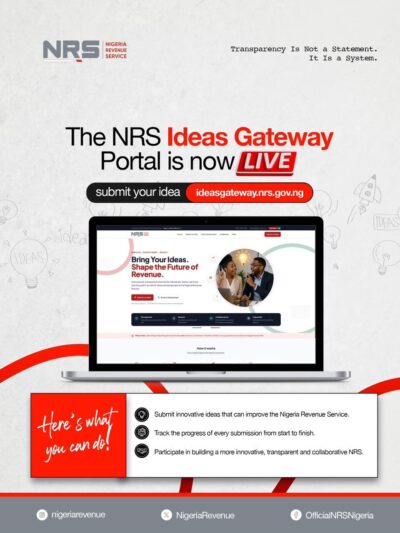
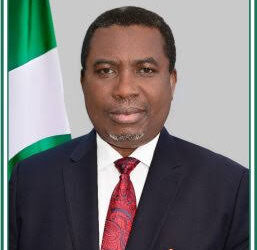
Managing director and chief executive officer of NLNG, Engr. Adeleye Falade, disclosed this today during the presentation of facts and figures of the company to the media at Lagos Continental Hotel in Lagos.
Falade said NLNG had also paid $47.2 billion in dividends to its shareholders, including the federal government, which holds the largest equity stake in the company.
He reaffirmed NLNG commitment to driving sustainable growth, enhancing Nigeria’s energy security and delivering long-term value through operational excellence, expansion of production capacity and strategic infrastructure developmeht.
Speaking during the interactive session, Engr. Adeleye Falade highlighted the significant progress made in improving plant performance. He noted that the Company’s operational utilisation has recovered considerably, with sustained efforts underway to achieve and maintain world-class levels of operational efficiency.
Falade said NLNG remains focused on safely delivering Train 7, strengthening domestic gas availability, supporting Nigeria’s industrialisation agenda and creating sustainable value for shareholders and the country, with the project expected to increase NLNG’s production capacity by approximately 35 per cent, from 22 million tonnes per annum (mtpa) to 30 mtpa, while significantly increasing Liquefied Petroleum Gas (LPG) production for the domestic market.
He said the company currently operates six liquefaction trains with assets valued at more than $22.9 billion. since production began, NLNG has built a fleet of 20 dedicated LNG vessels and loaded more than 6,285 cargoes for customers across the world.
According to Falade, NLNG now contributes about six per cent of global liquefied natural gas supply, reinforcing Nigeria’s position in the international LNG market.
A major focus of the report was the train 7 expansion project on bonny island, Rivers state. Falade said construction has reached 93 per cent completion and remains on schedule.
He said train 7 would increase the company’s LNG production capacity by 35 per cent and raise liquefied petroleum gas (LPG) output by 50 per cent, creating additional export volumes while supporting domestic gas supply.
Beyond exports, Falade said NLNG supplied 500,000 tonnes of cooking gas to the Nigerian market in the past year as part of efforts to expand access to cleaner household energy.
He added that the company’s gas gathering and utilisation model has helped reduce Nigeria’s gas flaring rate from about 65 per cent to below 20 per cent.
Falade also linked increased LPG adoption to improved public health, noting that more than 470,000 Nigerians die annually from illnesses associated with the use of firewood and other polluting cooking fuels.
He said one of the company’s landmark corporate social responsibility projects is the ₦120 billion bonny-bodo road, a 40-kilometre highway that provides the first road connection between bonny island and the mainland.
Despite the company’s performance, Falade identified inadequate gas supply as NLNG’s biggest operational challenge.
“One of our greatest challenges was gas supply. last year was extremely bad for us,” he said, adding that supply conditions have improved this year.
As train 7 approaches completion, Falade said the company’s priorities over the next decade would be to improve operational reliability, expand production and increase its contribution to Nigeria’s economy.
“Our goal is to deliver more energy, more revenue and more value to Nigerians,” he said.
With more than two decades of operations, NLNG remains one of Nigeria’s largest non-oil contributors to government revenue. its associated gas utilisation model has also been recognised as a key contributor to reducing gas flaring in the country.